
valeria.rodriguez@lawrank.com | January 23, 2026 | Car Accidents
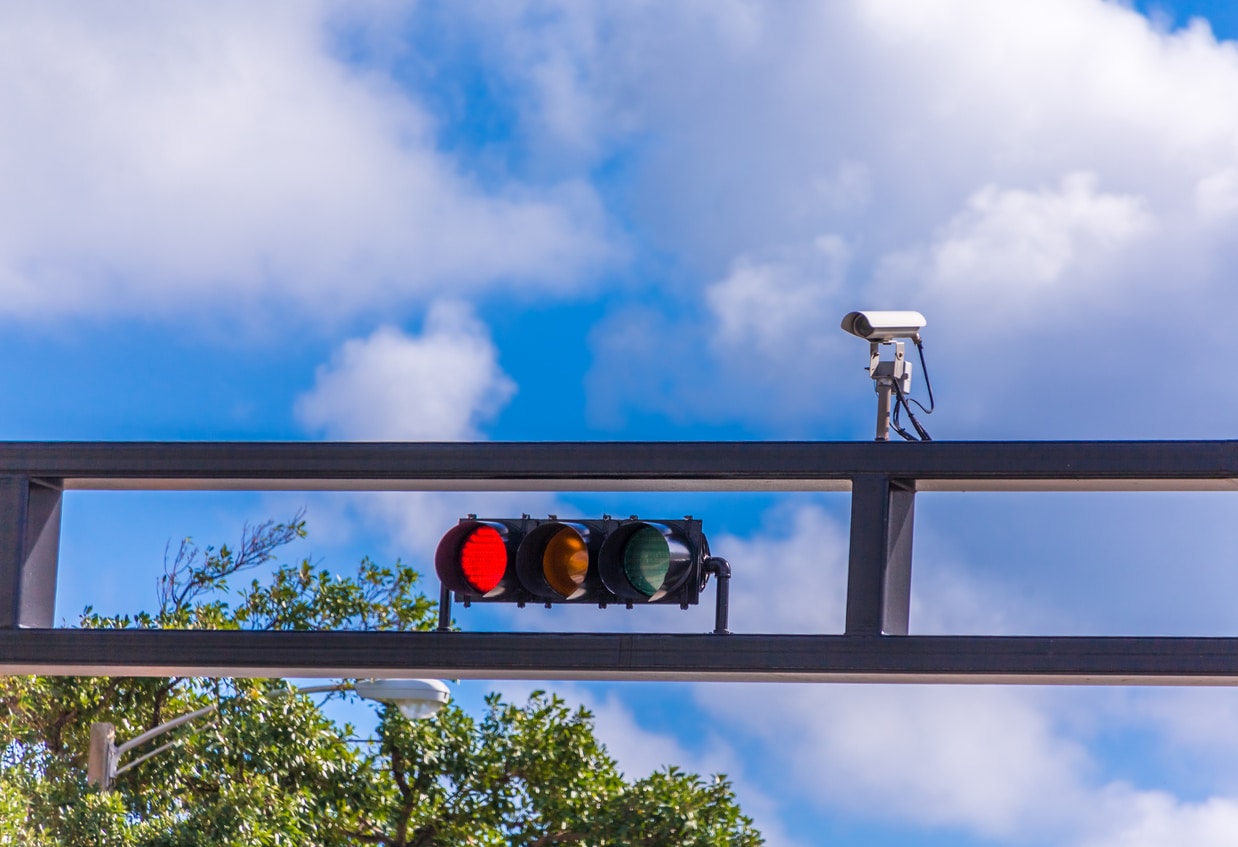
Drivers in Texas do not always know what to do when traffic lights suddenly stop working. Power outages, storms, or equipment failures can leave an intersection dark or flashing, creating confusion and increasing the risk of crashes. Understanding the rule or law when traffic lights are out helps drivers avoid tickets and reduces the chance of serious accidents.
Texas law treats malfunctioning traffic signals differently depending on whether the light is completely dark or flashing. Knowing how to respond in each situation is critical for staying safe and following the law.
What Texas Law Says About Traffic Lights That Are Out
Under Texas Transportation Code § 544.007, when a traffic signal is not operating, drivers must treat the intersection as a four-way stop. This rule applies when the signal is completely dark or not functioning in any direction.
That means every driver approaching the intersection must come to a full stop before entering. Drivers then proceed in the order they arrived, yielding the right of way as required.
Failing to treat a dark signal as a stop sign can result in a traffic citation and may place fault on a driver if a crash occurs.
What to Do When a Traffic Light Is Completely Dark
When all lights are off at an intersection, Texas law is clear. Drivers must act as if there are stop
signs on all sides.
When approaching a dark traffic signal, drivers should:
- Come to a complete stop before the intersection.
- Look in all directions for other vehicles, pedestrians, and cyclists.
- Yield to vehicles that arrived first.
- Yield to vehicles on the right if two drivers arrive at the same time.
- Proceed only when it is safe to do so.
Rolling through a dark intersection without stopping is dangerous and illegal. Many serious intersection crashes happen because drivers assume others will stop or believe they have the right of way.
What Flashing Red or Flashing Yellow Lights Mean
Sometimes traffic lights do not go completely dark. Instead, they flash to warn drivers. The color of the flashing light determines how drivers must respond.
A flashing red light means the same thing as a stop sign. Drivers must come to a full stop and proceed only when it is safe.
A flashing yellow light means drivers should slow down and proceed with caution. A stop is not required unless necessary for safety.
In these situations, drivers must pay close attention to cross traffic. A common example is one road flashing yellow while the cross street flashes red. Drivers facing the yellow light should be prepared for others to stop but should never assume it.
Who Has the Right of Way at a Dark Intersection
When traffic lights are out and treated as a four-way stop, standard right of way rules apply.
Drivers should remember these basic rules:
- The first vehicle to stop goes first.
- If two vehicles arrive at the same time, the driver on the right goes first.
- Drivers turning left must yield to oncoming traffic going straight.
- Pedestrians always have the right of way in marked or unmarked crosswalks.
Confusion often arises when multiple vehicles arrive at once. In these cases, patience and clear communication help prevent crashes.
What Happens if You Do Not Follow the Rules
Ignoring the rule or law when traffic lights are out can have serious consequences. A driver who fails to stop or yield may face a traffic ticket for running a signal or failing to obey a traffic control device.
If a crash occurs, the driver who did not stop or yield is often found at fault. Insurance companies and police reports frequently rely on traffic laws to determine responsibility.
Violations can lead to:
- Traffic citations and fines.
- Points on your driving record.
- Increased insurance premiums.
- Liability for injuries or property damage after a crash.
Following the law protects both safety and legal rights.
Why Accidents Are More Likely When Signals Are Out
Intersections with malfunctioning traffic lights are high risk areas. Drivers may be distracted, impatient, or unsure of the rules. Some drivers stop while others do not, which creates unpredictable movement.
Common causes of accidents at dark intersections include:
- Drivers failing to stop.
- Drivers assuming they have the right of way.
- Speeding through the intersection.
- Poor visibility during storms or at night.
Extra caution is always necessary when approaching an intersection with a nonworking signal.
What To Do if You Are Involved in an Accident
If a crash happens at an intersection where traffic lights are out, it is important to document the scene carefully. Police reports often note whether the signal was malfunctioning and how each driver responded.
After an accident, drivers should:
- Call the police and report the crash.
- Take photos of the intersection and traffic signals.
- Get contact information from witnesses.
- Seek medical care if injured.
- Avoid admitting fault at the scene.
Determining fault often depends on whether drivers followed the correct rules for a dark or flashing signal.
Contact the Cypress Car Accident Attorneys at Attorney Brian White Personal Injury Lawyers for Help Today
Understanding what the rule or law is when traffic lights are out helps drivers avoid accidents, tickets, and liability. Texas law expects drivers to slow down, stop when required, and proceed only when it is safe.
If you’ve been injured in a car accident involving inoperational traffic lights, Attorney Brian White Personal Injury Lawyers is here to help. Our Cypress car accident lawyers will fight to pursue the compensation you deserve. Contact us today at (713) 500-5000 for a free consultation.
Attorney Brian White Personal Injury Lawyers – Houston, TX
3120 Southwest Freeway, Suite 350, Houston, TX 77098
Attorney Brian White Personal Injury Lawyers – East Fwy, Houston, TX
11811 East Fwy, Suite 630-06, Houston, TX 77029
Attorney Brian White Personal Injury Lawyers – South Loop, Houston, TX
2600 S Loop W, Suite 293, Houston, TX 77054
Attorney Brian White Personal Injury Lawyers – Katy Freeway, Houston, TX
11511 Katy Fwy Suite 515, Houston, TX 77079
Attorney Brian White Personal Injury Lawyers – Clear Lake, Houston, TX
1300 Bay Area Blvd Suite B268, Houston, TX 77058
Attorney Brian White Personal Injury Lawyers – Cypress, TX
Attorney Brian White Personal Injury Lawyers – The Woodlands, TX
1776 Woodstead Ct ste 203, The Woodlands, TX 77380
About the Author Brian White

Brian White earned his J.D. from South Texas College of Law in Houston and is licensed to practice in Texas. He is a Board-Certified Personal Injury Trial Lawyer.
Dedicated to giving back, he actively supports local charities and community initiatives.
Client testimonials highlight Brian’s compassion, open communication, and dedication to achieving the best outcomes for those he represents.
Avvo / Justia / Linkedin / Facebook / Youtube / Instagram / Yelp /