
valeria.rodriguez@lawrank.com | November 20, 2025 | safety
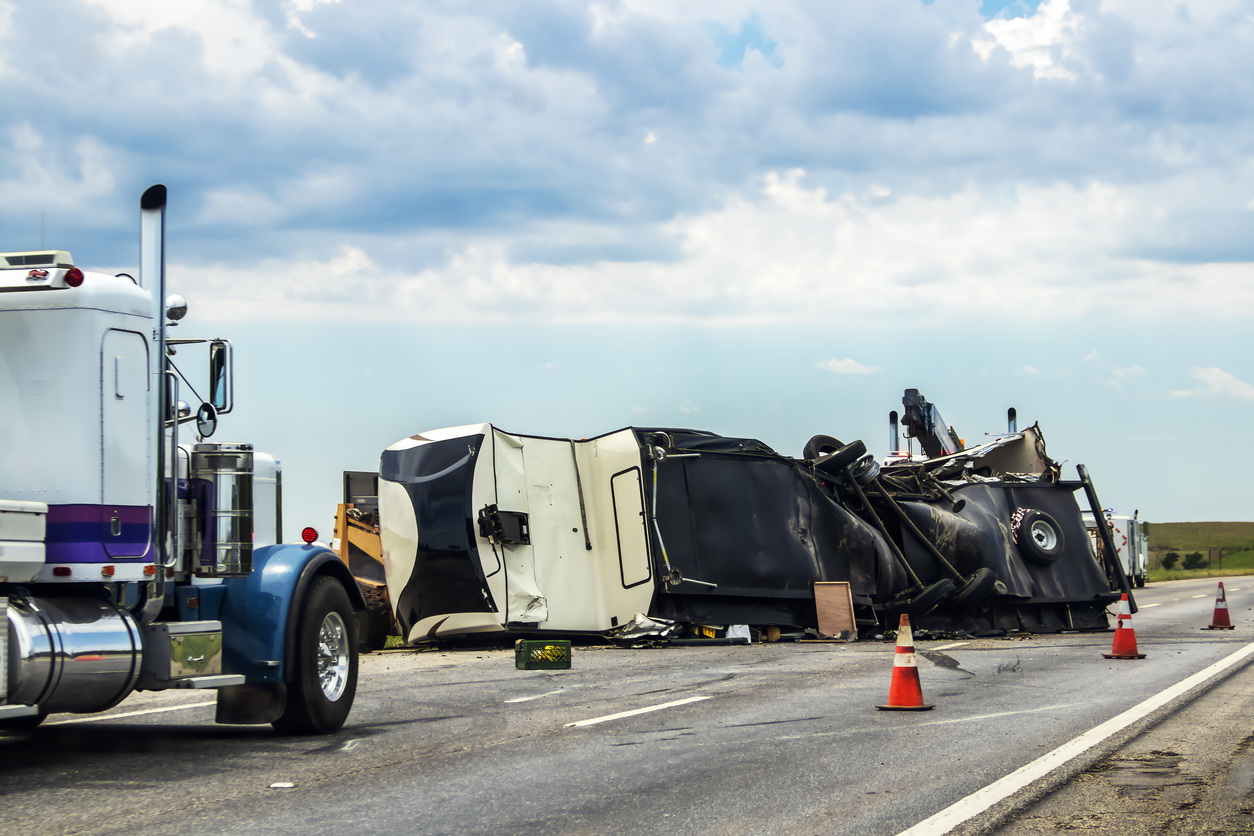
Artificial intelligence (AI) is rapidly changing the commercial trucking industry. What began as basic driver-assist technology is evolving into sophisticated safety systems capable of monitoring, predicting, and even intervening to help prevent accidents. For drivers and residents in Houston, Texas—a city crisscrossed by major freight corridors—these changes could have real-world implications for road safety.
But is AI actually reducing semi-truck accidents? This article examines the current state of AI’s impact, discussing both the technological advancements and the practical challenges of integrating AI into the trucking industry. We’ll explore the data, analyze the successes, and discuss the limitations that remain before AI can more fully transform the way goods are moved across the country.
How Trucking Companies Use AI to Reduce Crashes
Truck driver error is the leading cause of a vast majority of semi-truck crashes. Many commercial fleets are now equipped with AI-based technologies designed to reduce human error.
These systems include:
- Forward collision warning and automatic emergency braking
- Lane departure alerts and lane-keeping assist
- Blind spot monitoring and surround view cameras
- Driver fatigue and distraction detection tools
- Telematics systems that track real-time behavior patterns
These tools are meant to alert drivers before a crash occurs or to take control in emergency scenarios. The goal isn’t to replace the driver entirely but to add layers of protection against common risk factors like distraction, drowsiness, and poor visibility.
Has AI Actually Reduced Truck Accidents?
The Insurance Institute for Highway Safety (IIHS) has reported that forward-collision warning systems reduce the frequency and severity of large truck crashes.
However, adoption is not yet universal. Smaller trucking companies, which make up a significant share of the industry, may struggle with the cost of upgrading their fleets. And even in AI-equipped vehicles, success depends on proper system maintenance and driver training.
What About Autonomous Trucks?
Houston is one of several cities in Texas where autonomous semi-trucks are already being tested. These vehicles use a combination of AI, cameras, lidar, radar, and GPS to operate without a human driver under certain conditions.
While this technology promises to eventually remove human error from the equation, it is still in the development stage. Questions about liability, ethical decision-making, and public safety continue to delay widespread implementation.
What Happens When AI Malfunctions?
Technology can fail—and when it does, the consequences can be serious. If a semi-truck’s AI fails to detect a stopped vehicle or misreads lane markings, it could cause a devastating crash.
In such cases, determining fault may involve complex questions of:
- Product liability (for defective hardware or software)
- Maintenance negligence (failure to update or calibrate systems)
- Driver or operator error (overreliance on automated features)
Texas law allows injured parties to seek compensation from multiple liable entities, but untangling these issues often requires expert testimony and in-depth investigation.
The Role of AI in Post-Crash Investigations
One under-discussed benefit of AI in trucking is the data it generates. Many modern commercial trucks now feature AI-enhanced event recorders or telematics systems.
These devices capture:
- Vehicle speed and braking patterns
- Lane position and steering inputs
- Proximity alerts and system warnings
- Video and sensor data before, during, and after a crash
This information can be vital in reconstructing what happened, especially when the accounts of witnesses differ. In Houston, where high-speed collisions involving large trucks are not uncommon, access to accurate data can make or break a personal injury claim.
How Local Infrastructure Influences AI Effectiveness
A frequently overlooked but important factor is local infrastructure compatibility. For example, AI systems rely heavily on road markings, signage, and sensor visibility. Houston’s aging highways, frequent construction zones, and inconsistent lane markings can make it difficult for AI to function correctly.
When truck routes include poorly maintained areas or frequent detours, even the best technology may struggle to interpret its environment. This is particularly important when evaluating liability after a crash involving a semi-truck using AI-driven safety features.
Contact the Houston Truck Accident Lawyers at Attorney Brian White Personal Injury Lawyers for Help Today
If you were injured in a semi-truck accident in Houston, and you believe AI or automation played a role, you don’t have to navigate the legal complexities alone. An experienced truck accident lawyer from Attorney Brian White Personal Injury Lawyers can help you understand your rights, gather key evidence, and pursue fair compensation.
For more information, contact the Houston personal injury law firm of Attorney Brian White Personal Injury Lawyers by calling (713) 500-5000.
Attorney Brian White Personal Injury Lawyers – Houston, TX
3120 Southwest Freeway, Suite 350
Houston, TX 77098
Attorney Brian White Personal Injury Lawyers – East Fwy, Houston, TX
11811 East Fwy, Suite 630-06
Houston, TX 77029
Attorney Brian White Personal Injury Lawyers – South Loop, Houston, TX
2600 S Loop W, Suite 293
Houston, TX 77054
Attorney Brian White Personal Injury Lawyers – Katy Freeway, Houston, TX
11511 Katy Fwy Suite 515
Houston, TX 77079
Attorney Brian White Personal Injury Lawyers – Clear Lake, Houston, TX
1300 Bay Area Blvd Suite B268
Houston, TX 77058
Attorney Brian White Personal Injury Lawyers – Cypress, TX
4606 Farm to Market 1960 W. Ste 444,
Houston, Texas 77069
Attorney Brian White Personal Injury Lawyers – The Woodlands, TX
1776 Woodstead Ct ste 203,
The Woodlands, TX 77380
About the Author Brian White

Brian White earned his J.D. from South Texas College of Law in Houston and is licensed to practice in Texas. As a Board-Certified Personal Injury Trial Lawyer, Brian represents clients throughout Houston in cases involving car accidents, truck accidents, motorcycle accidents, brain injuries, wrongful death, and more.
Dedicated to giving back, he actively supports local charities and community initiatives across Houston. Client testimonials highlight Brian’s compassion, open communication, and dedication to achieving the best outcomes for those he represents.
Avvo / Justia / Linkedin / Facebook / Youtube / Instagram / Yelp /